
I Was an Accidental Manager — and My Boss Went on Holiday on My First Day
Or: How I learned that being good at your job is not, in fact, a qualification for managing other people
Victoria Canham • 26 March 2026 • 8 min read

I still remember the carpet.
It was that particular shade of institutional grey that exists only in budget offices and waiting rooms — the kind you find in Cape Town office parks in 2002, where the air conditioning hummed with the forced optimism of a country still learning how to translate workplace legislation into actual culture.
I was staring at it, quite hard, because I had been deposited at a desk ten minutes earlier and was now apparently in charge of ten people who were looking at me with the polite confusion of passengers who've just been informed their pilot has never actually landed a plane.
My new boss, the one who had offered me this "promotion" just a few days prior, was already incognito, probably en route to a fancy villa somewhere pricey. She had left no job description. No instructions. No indication that I was expected to chair the morning meeting in approximately 10 minutes, despite having never chaired a proper meeting in my life.
What she had left me with was a recruitment desk to run, a team of office workers who knew the job better than I did, and the lingering suspicion that I had not been promoted so much as relocated.
(Reader, I had been relocated. Turns out the enormous, butch lesbian now running half the hotel had made several advances I had politely declined to her chagrin. My boss later suggested I should have "taken one for the team." By 2002, South Africa had workplace protection on paper. The culture, however, was still catching up.)
So there I was. Twenty-nothing, hospitality-trained, suddenly managing recruitment operations with the same qualifications I might bring to neurosurgery: enthusiasm, a strong work ethic, and absolutely no idea what I was doing.
This was not the first time I had encountered the particular ego architecture of hospitality management. It would, however, be the last. That morning in Cape Town — staring at grey carpet while ten strangers waited for me to lead — was the moment I understood that thriving in this industry would require submitting to egos I had no interest in feeding. I left hospitality shortly after. But I never forgot what it felt like to be set up to fail.
The Performance of Competence
The thing about becoming an accidental manager is that the terror is immediate, but the isolation is worse.
I spent my first week constructing elaborate performances of knowing what I was talking about. I nodded thoughtfully at reports I didn't understand. I scheduled meetings I didn't know how to run. I made decisions based on what felt right, which is management-speak for "guessing while hoping no one notices."
The team, bless them, were kind, mostly. They were also confused. I had gone from managing entry-level hospitality workers in a hotel — where at least I understood the work — to managing recruitment consultants in an office, where I understood precisely nothing. I didn't know the systems. I didn't know the clients. I didn't know why we had three different filing cabinets marked "URGENT — DO NOT TOUCH" that everyone touched daily.
What I did know, with horrible clarity, was that I was being watched. Every question I asked revealed my ignorance. Every hesitation broadcast my uncertainty. So I stopped asking questions. I retreated into a performance of busyness — shuffling papers, making calls, looking purposeful — while internally dying, and also calculating how long until someone realised I was essentially improvising.
This is the particular hell of the accidental manager: you are simultaneously expected to lead and forbidden to admit you need help. The organisation has invested nothing in your preparation, but expects full competence immediately. You have been promoted based on technical skill in your previous role, then dropped into a position requiring entirely different capabilities.
And you are, above all, alone.
What I Know Now: I Was Being Set Up to Fail
With twenty-five years of distance, I can see the architecture of that failure clearly. It wasn't personal. It wasn't even particularly unusual. It was simply how organisations have always handled management transitions: badly, cheaply, and with a bizarre faith in osmosis.
The research confirms what my carpet-staring self suspected. According to the Chartered Management Institute, 82% of managers in the UK are "accidental" — promoted without formal training. The Centre for Creative Leadership puts the figure at 60% for new managers receiving no training at all. Gallup found that only 30% of front-line supervisors were placed in their roles based on supervisory skills rather than performance in their previous jobs.
What this creates is not just individual struggle, but systemic damage. CMI research shows that 43% of UK managers are rated ineffective by their own teams. Half of employees who don't rate their manager plan to leave within the year. The UK's productivity gap — that persistent 18-point deficit against G7 counterparts — has been directly attributed by the OECD to inadequate leadership and management skills.
The cost is staggering: an estimated £19 billion lost to the UK economy annually. Globally, poor management costs between $960 billion and $1.2 trillion per year in the US alone.
Statistics don't capture the human cost of that first morning. The manager who spends their first month pretending rather than learning. The team who loses faith. The talent that walks out because their manager is overwhelmed, unsupported, and ultimately ineffective through no fault of their own.
I was not a bad manager because I was a bad person. I was a bad manager because I had been given a role requiring emotional intelligence, strategic thinking, delegation, and conflict resolution — and I had been trained in none of them. I had been trained to run a kitchen.
Why This Story Is Not Unique (Unfortunately)
The accidental manager is not an anomaly. They are the standard.
Every year, the UK produces approximately 400,000 new managers. Of these, only one in five receives appropriate management and leadership training. That leaves over 300,000 accidental managers added to the pool annually, each one stumbling into responsibility with the same misplaced confidence that technical competence equals leadership capability.
The phenomenon is so common that it has a name: the Peter Principle, coined by Laurence Peter and Raymond Hull in 1969. Employees rise to their "level of respective incompetence" — promoted until their performance declines, then left in place because organisations lack either the insight or the courage to move them into roles that actually use their talents.
Modern workplaces have only amplified the problem. Today's managers must navigate remote teams, mental health conversations, generational differences, digital transformation, and AI integration; often without the foundational skills to manage basic one-to-ones effectively.
The result? 60% of new managers underperform in their first two years. 35% of bosses have repeatedly asked their employers for training, with almost half of those feeling "overwhelmed" and "underequipped". Yet still, the promotions continue, the training doesn't materialise, and the cycle repeats.
Your organisation is almost certainly doing this right now. Someone in your company was promoted last month without preparation. Someone is chairing meetings they weren't trained to run. Someone is managing former peers without guidance on how to navigate that transition. Someone is interviewing new team members with no idea how to conduct an effective interview or select the right candidate. Someone is staring at institutional grey carpet, wondering how long until everyone realises they are improvising.
What Organisations Should Actually Do (And Almost Never Do)
The fix is not complicated. It is simply expensive in time and attention, which is why organisations avoid it.
Stop promoting based on technical competence alone. Being brilliant at recruitment, or engineering, or sales, or hospitality does not predict managerial success. Gallup found that promoting high-performing sales representatives to managerial roles resulted in a 7.5% decline in subordinates' sales performance. Technical excellence and leadership capability are different skills. Assess for both, or accept the consequences.
Provide transition support, not just training. A three-day course six months into the role is too late. New managers need structured transition coaching: pre-promotion preparation, intensive support in the first 90 days, and ongoing mentorship from experienced leaders who understand the specific challenges of that organisation.
Create psychological safety to admit ignorance. The performance of competence I constructed in my first week was necessary because admitting uncertainty felt dangerous. Organisations must explicitly give new managers permission to learn, to ask basic questions, to shadow experienced peers without judgement.
Address the identity shift. Moving from individual contributor to manager is not a job change. It is an identity transformation. You are no longer valued for what you produce personally, but for what you enable others to produce. This requires psychological adjustment that training alone cannot address.
Measure managerial effectiveness properly. 80% of executives believe their organisations deliver projects successfully, yet data suggests 80% of organisations have project failure rates around 80%. This delusion persists because organisations don't honestly evaluate managerial performance. They should.
What You Can Do If You're in This Situation Right Now
If you are currently staring at your own version of institutional grey carpet, here is what I wish someone had told me:
Stop performing. Start learning. The energy you are putting into looking competent is energy you could be putting into becoming competent. Admit what you don't know. Ask the questions. Your team already knows you're new; pretending otherwise wastes everyone's time.
Find one safe person. Be discerning; not everyone is trustworthy or has your best interests at heart. You need someone who understands your organisation and can answer your stupid questions without judgement. This might be a peer manager, a former manager, or someone in HR who actually cares. One reliable source of guidance changes everything.
Separate the role from your worth. You are struggling because the system failed you, not because you are fundamentally inadequate. The organisation created this situation. Your job is to navigate it, not to be perfect immediately.
Focus on relationships first. In your first month, your technical knowledge matters less than your team's trust. Listen more than you speak. Understand how work actually happens before you try to change it. The rest can follow.
Document everything. Keep a private record of what you're learning, what's confusing you, and what you need to address. This becomes your development roadmap and, eventually, your evidence for why the organisation needs to invest in proper management development.
And if your organisation won't support you? If you're repeatedly asking for training and receiving platitudes? Consider that this may not be a place that values your growth. A staggering 50% of employees who don't rate their manager plan to leave within the year. Sometimes the most sophisticated career decision is recognising when a system is too broken to serve you.
The Deeper Work
This blog is the first in a series about accidental management; what it costs us, why it persists, and how we survive it. However, survival is not the same as thriving.
The deeper work is about understanding why organisations keep making the same mistakes, decade after decade, despite overwhelming evidence that it damages productivity, retention, and human wellbeing. It's about recognising that management is not a natural gift but a learned discipline. And it's about demanding better, for ourselves and for the people we lead.
That morning in Cape Town changed my trajectory. It taught me that I could not thrive in environments where ego masqueraded as leadership and where my development was treated as an optional extra. It was a major catalyst in why I left hospitality.
I’ve spent every working moment since learning what good leadership actually looks like, and how rare it is.
If you're an accidental manager right now, you are one of millions, navigating the same impossible transition with the same inadequate preparation. The carpet may be a different colour, but the terror is the same.
You can get through this. You can even become good at it, but not by pretending, and not by yourself.
Follow along for the full series — or DM me @coachvictoriacanham if you need support now.
Victoria Canham is an ICF Professional Certified Coach with 25 years in talent development and change management. She works with mid-career professionals and new managers navigating the transition from doing the work to leading the people who do the work. She is based in South East England but works globally, and still avoids institutional grey carpet whenever possible.
Recommended Reading
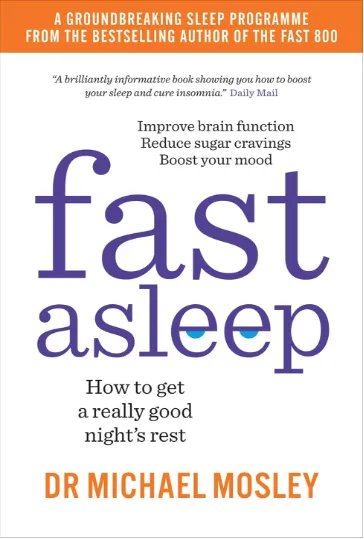
Fast Asleep: How to get a really good night's rest by Dr Michael Mosley
A good night's sleep is essential for a healthy brain and body. So why do so many of us struggle to sleep well? In Fast Asleep, Dr Michael Mosley explains what happens when we sleep, what triggers common sleep problems and why standard advice rarely works.
Prone to insomnia, he has taken part in numerous sleep experiments and tested every remedy going. The result is a radical, four-week programme, based on the latest science, designed to help you re-establish a healthy sleep pattern in record time.
With plenty of surprising recommendations - including tips for teenagers, people working night shifts and those prone to jet lag - plus recipes which will boost your deep sleep by improving your gut microbiome, Fast Asleep provides the tools you need to sleep better, reduce stress and feel happier.
We’re not just about overcoming obstacles, we’re about transforming lives.

Victoria Canham - Career & Leadership Coach
Victoria is an ICF-accredited certified professional coach, who offers personalised performance coaching. With a background in change management and countless hours of professional coaching training and experience, I made the big switch to full-time coaching in 2020. I know what it is like to suddenly have the rug pulled out from under you while you're busy making other plans, as a result, I now help people like you to bounce back from adversity and major setbacks to emerge stronger and better than ever before. Our clients have transformed from feeling overwhelmed by life's challenges to confident, goal-driven individuals who navigate life's obstacles with ease. They've achieved their personal and professional objectives and embodied peak performance in all aspects of life. You too can experience this transformation. This is your moment. Your chance to take control, to choose growth over stagnation, achievement over inaction. This is your opportunity to prove to yourself that you're not defined by your challenges—you're defined by how you rise above them. Are you ready to transform your life and achieve peak performance?
Hang out with us on social media


© Copyright 2026 | Victoria Canham Consultancy